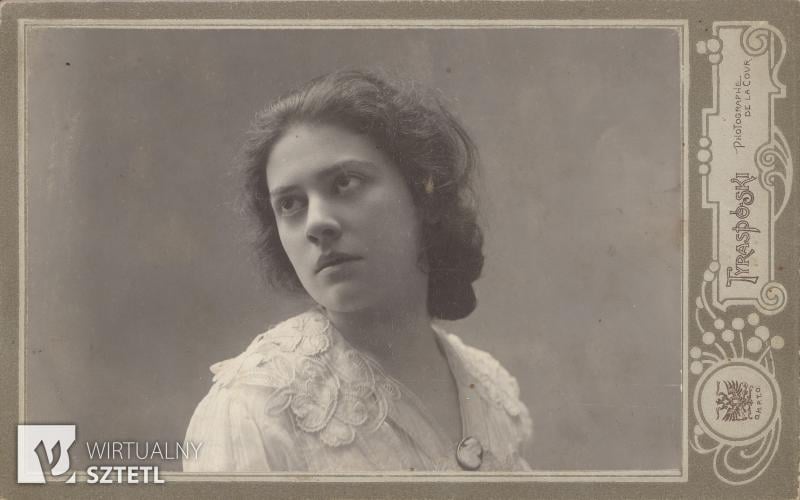
Hanna Hirszfeldowa – (17th July 1884, Wilczkowice – 20th February 1964, Wrocław) – professor of medicine, paediatrician.
Hanna Hirszfeld (née Kasman) was born on 17th July 1884, in the Wilczkowice estate in the Warsaw District[1.1], to parents Saul (Paweł) Kasman and Sara (Sabina) (née Gesundheit).[1.2]
Having graduated from secondary school in Łódź, in 1900, she enrolled in medical school in Montpellier. Subsequently (in 1902–1908), she continued her studies in Paris and Berlin.[1.3] In Berlins, she rubbed shoulders with Ludwik Hirszfeld (1884–1954), whom she had first met while living in Łódź. The man was intrigued by Helena, who “stood out among her peers due to a unique mix of gravity and sweetness, which made many people, not just Ludwik, turn their gaze towards her.”[1.4]
The two young people soon fell in love and, although Ludwik’s parents admonished him to wait until he graduated, he married Hanna in a civil ceremony in 1905, when the two were still students.[1.5] They later continued their academic paths, with Hanna taking the additional role of the family breadwinner and earning money as a French tutor. She also received some financial support from her mother.[1.6] Hanna Hirszfeld graduated in 1908, obtaining the degree of Doctor of Medicine. She found employment as an assistant in a paediatrics clinic in Heidelberg, where she worked until 1911.
Soon afterwards, the Hirszfeld couple moved to Zurich. Ludwik was emplyed at the Institute of Hygiene, and Hanna, at the Children’s Clinic under Emil Feer.[1.7] She later worked at the Internal Diseases Clinic, Neurological Clinic of Heidelberg University and Children’s Clinic of Zurich University.
Already, in the first years of their professional careers, Hanna and her husband were particularly interested in studying blood. Hanna analysed the consequences of anaemia for red blood cells and changes in white blood cells resulting from anaphylactic shock as well as tuberculosis, rickets, and tetanus in children.
Her interests were reflected in her doctoral dissertations, entitled Contribution to the Morphology of White Blood Cells (submitted in Berlin) and Pyloric Stenosis and First Application of Ramstedt’s Operation (in Naples). Hirszfeld’s principal field of study was paediatrics, especially paediatric haematology and allergy treatment.
Apart from working in academia, Hirszfeld was involved in other initiatives. When the Great War broke out, she worked with the Swiss Red Cross, training nurses to work with soldiers on the frontline. She supervised a special Polish medic course organised in a children’s hospital.[1.8]
When, in 1915, Ludwik Hirszfeld decided to leave for Serbia, Hanna joined him, despite her worried husband’s wishes. She worked in a field hospital as both a physician and a nurse. She managed disinfection procedures, treated patients and educated the staff. The situation became dire, when an epidemic of typhus broke out in Serbia. Ludwik became involved in setting up a hospital and a microbiology laboratory. He successfully developed a vaccine which helped curb the typhus epidemic. His wife supported him in his work, the two trained medical staff together and organised hygiene education. Hanna’s commitment won her general admiration and respect in her field.
When Austrian troops entered Serbia, the Hirszfeld couple were evacuated with the retreating army, first to Albania, then Corfu and, eventually, to Switzerland via Italy. They later went to Greece at the invitation of the Serbian government-in-exile. They settled in Thessaloniki, where they set up a microbiology laboratory.
Ludwik Hirszfeld also headed the local Infectious Diseases Clinic, trained physicians and medical staff. The married couple took advantage of the variety of nationalities represented by the hospital patients to carry out research on blood types. They published the results of their pioneer studies in The Lancet.[1.9] Their work helped lay the foundations for a new branch of science, today known as sero-anthropology.
From Thessaloniki, they moved to Zurich, where they carried out research at the Paediatrics Clinic and the Hygiene Department of the local university. However, they soon began to consider returning to Poland. Ludwik was particularly eager to do so, arguing that “you have a past and a future in your homeland and, abroad, you only have the present.”[1.10]. Though sceptical, Hanna conceded to her husband’s wishes. She always believed that “the one who cares more gets to decide”[1.11].
The couple came to Poland in 1919 and settled in Warsaw. They rented a small flat at ul. Marszałkowska 49. Hanna Hirszfeld worked as a school physician and later as a paediatrician in a social insurance company, at the outpatient clinic of the Polish Health Insurance Fund. In the years 1922–1939, she was the head physician of the Paediatrics Clinic of the University of Warsaw.[1.1.7]. She was an active member at the Warsaw branch of the Polish Paediatric Society.[1.12].
Hanna and Ludwik’s only child, daughter Maria, was born on 12 August 1920.[1.13] Hanna managed to reconcile rearing the child with her professional work. She also continued to be involved in the research carried out with her husband. In the interwar period, she published several works dealing with childhood illnesses.[1.14] She was a living proof that a woman not only did not have to choose between her career and family life, but she could also advance her academic pursuits while doing both.
The Hirszfeld couple eventually managed to fulfil their private wish. In 1930, they moved to a house with a garden in the Saska Kępa neighbourhood (manor at ul. Obrońców 27), which they constructed with money they had been saving. Maria graduated from high school and enrolled in the Sorbonne in 1938.
The family spent the last summer in a free Poland in Jadwisin and Wisła. Their happy life was interrupted by the outbreak of the war. Although it was becoming increasingly more difficult to do research, Hanna Hiszfeld continued to work in the insurance fund clinic and, in a nursery, she also helped establish an outpatient clinic and treated wounded people, headed a medical rescue centre and set up a makeshift hospital in a school in Saska Kępa. And as busy as she was, she still managed to write several academic works in medical sciences.[1.15]
However, the time of occupation brought some insurmountable challenges. At first, the Hirszfelds managed to evade forced resettlement into the ghetto. There was even a chance of them leaving occupied Poland. Arthur and Elli Coco, the couple’s American colleagues from the Heidelberg Institute, were collecting funds to bring them to the U.S. Unfortunately, they did not manage to obtain a travel permit. The Yugoslavian embassy in Poland was also looking to help them migrate, offering to grant them honorary citizenship for their merits during World War I. However, the Hirszfelds did not accept the offer and remained in Poland.
In 1941, they were resettled into the ghetto. Although the Hirszfelds were not particularly religious, they had themselves and their daughter Maria baptised and came under the care of Catholic priest Marceli Godlewski.[1.16] They lived in the presbytery of the All Saints Church in plac Grzybowski.[1.17]
Like the other physicians in the ghetto, Ludwik was involved in treating patients and fighting epidemics. He opened a blood donation point and was a lecturer at medical courses. Hanna worked in an isolation hospital, where she did her best – despite not having access to medication – to treat tuberculosis, dysentery, and hunger disease. She was the head of the Neonatal Ward at the Bersohn and Bauman Jewish Hospital on ul. Leszno.
“With basically no resources, she fought tuberculosis, advanced hunger disease, vitamin deficiencies, various infectious diseases, most importantly typhus.”[1.18]
Thanks to the efforts of many friendly people, the Hirszfelds managed to escape from the ghetto in July 1942.[1.19] Ludwik and their daughter left first, followed by Hanna. They temporarily hid in the Żoliborz district. Later, they left Warsaw and went into hiding in smaller localities, including Wesoła, Szczytniki, Nowy Korczyn, and Kamienna.
In January 1943, Maria Hirszfeldówna died of anorexia at the age of 23. She was buried in the village of Kocina under a false name – “Maria Halecka”.[1.20] After their daughter’s passing, the Hirszfeld couple moved to Miłosna and then to Lipka, a village in Wołomin District.
Still before the end of the war, in 1944, the couple left for Lublin and helped set up the Faculty of Medicine at the newly established Maria Curie-Skłodowska University. Hanna worked in the Department of Paediatrics and organised a university clinic (together with Witold Klepacki and Irena Kmit).
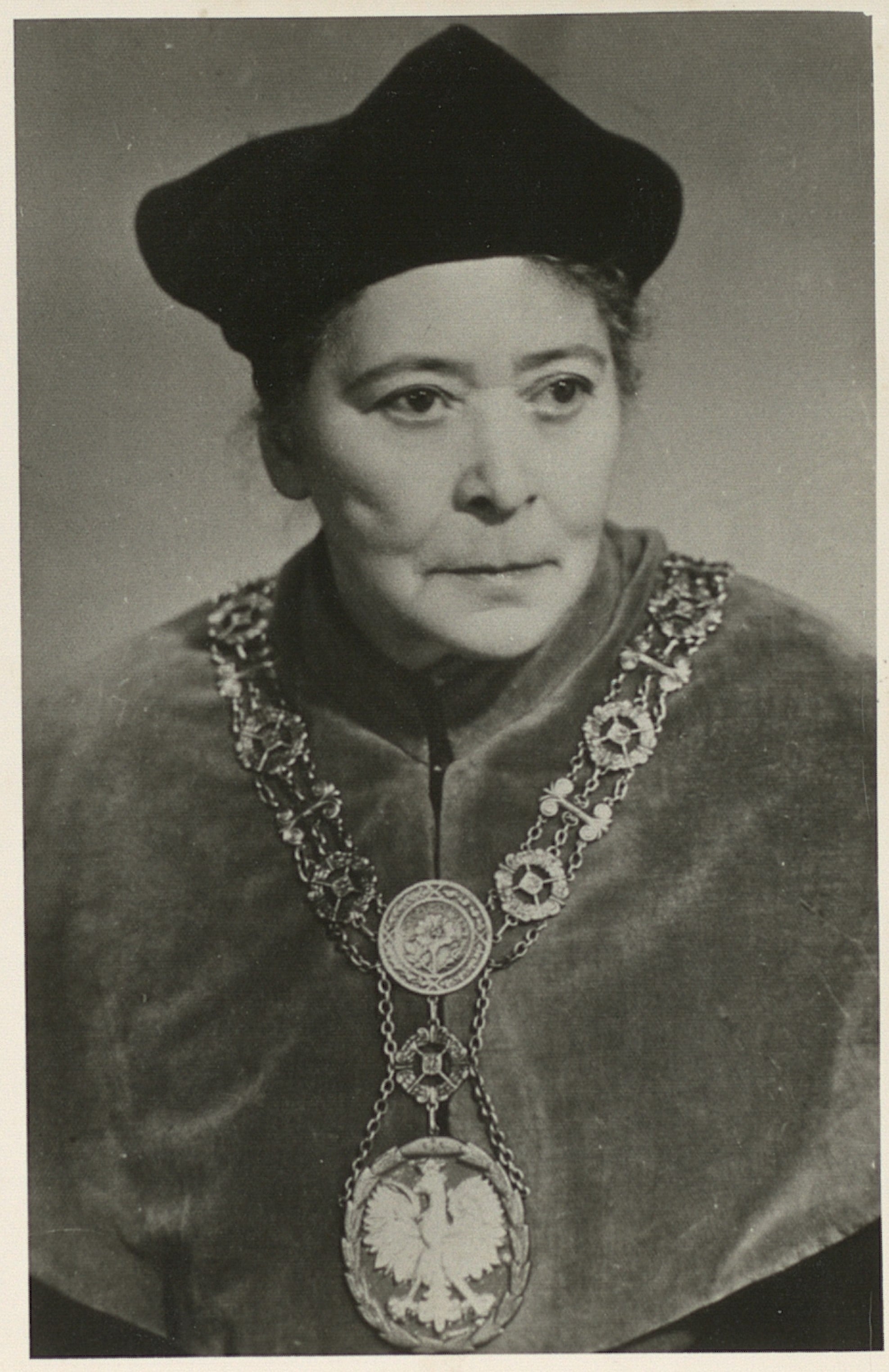
On 13 January 1945, she received her habilitation in paediatrics based on a dissertation entitled Constitutional Matters in Childhood Infectious Diseases. On 1st July, she obtained the position of Associate Professor.[1.21] In 1945, she became the head of the Department of Paediatrics.
The Hirszfeld couple soon decided to move to Wrocław, where they eventually settled permanently. Hanna became head of the Department of Paediatrics. She was involved in charity, raising funds for orphanages. In the years 1946–1947, she was the head of the Municipal Children’s Hospital, where she set up a paediatrics clinic.[1.22] It was the first children’s ward in Dolny Ślask opened after the war, boasting a laboratory and an in-hospital kitchen (including a breast milk collection point).
As an avid promoter of breastfeeding, “she strongly encouraged and taught mothers to breastfeed their children and to donate any extra milk to the sickest and weakest children. It was with them in mind that Professor Hirszfeld set up the first breast milk collection point in Poland at her clinic.”[1.23]
In the process of establishing the facility, she selected staff from among both Polish and German physicians. In this respect, she displayed no resentment or hostility towards the German nation. She treated Polish and German children with equal commitment. Her ambition was not only to provide paediatric medical care, but also to make the university clinic a research centre.
In 1946, the Hirszfelds stayed in the U.S. for several months at the invitation of the American Association of University Women.[1.24] In America charities, Hanna raised money for reviving Polish paediatrics. Her principal goal was to obtain books for the clinic and find support for her idea of establishing a nursing school in Wrocław. She managed to bring back to Poland a large collection of books and journals, but her efforts to obtain funding for her school were unsuccessful. As she later bitterly stated, “The Rockefeller Foundation doesn’t want to invest.”[1.25] Ludwik received several work offers from American laboratories. He declined, and the couple returned to Wrocław.
In 1947, a nursery and the first Red Cross nursing school in Poland were opened at the Wrocław clinic at Hirszfeld’s initiative. Hanna was also involved in founding the Wrocław branch of the Polish Paediatric Society and became its first chair. In 1950, the Hirszfeld couple signed the Open Letter to American Scientists calling for the banning of nuclear weapons.[1.26] and of the Scientific Council of the Institute of Immunology and Experimental Therapy in the local branch of the Polish Academy of Sciences.[1.27]
She participated in the works of the Polish Paediatric Society, the Wrocław Academic Society, the Polish Society for Rheumatology, the Polish Society of Microbiologists and the Institute of Mother and Child. She was one of the editors of the Pediatria Polska [Polish Paediatrics] journal published by the Polish Paediatric Society and the Institute of Mother and Child. She taught paediatrics at skill improvement courses attended by 26 physicians.[1.28]
In 1949, she obtained the title and position of full Professor. She was the supervisor and reviewer of numerous doctoral and habilitation dissertations.
The Hirszfelds’ marriage was undoubtedly extraordinary, full of love and understanding for each other’s needs. They complemented each other in professional work and supported one another’s scientific ambitions. Hanna proofread and reviewed every paper written by her husband. Reportedly, you could notice the typical features of her style in his speeches and lectures. She also translated Ludwik’s papers[1.29]. It was Hanna who encouraged Ludwik to give speeches – threatening to divorce him if he read from the script instead of speaking from memory[1.30]. After his death, she went through his notes and prepared his manuscripts for print[1.31].
They constituted a harmonious whole, despite being apparent opposites. Ludwik Hirszfeld tended to be hot-headed, diving head-first into new projects. Hanna tried to contain his fire. She always supported her husband in a level-headed, sensible manner. She was reconciled with the lot of a scientist’s wife, as she would emphasise that
“[a] scientist is not the worst type of husband. […] Fortunately, a scientist is like a little kid, though as a paediatrician, I need to point out that it is a bit of a problem child. […] Scientists like secretaries. Well, I recommend the wife to become the secretary. This is because the way to a scientist’s heart is… through the typewriter. You need to always have it within your arm’s reach. […] A scientist may become inspired in the least suspected moments. In this respect, a scientist’s wife cannot ever rest easy.”[[1.32].
Hanna was very understanding of her husband. She was able to forgive him for prioritising scientific goals over his family. When he would immerse himself in work, she would take responsibility for daily matters. “She wasn’t just the wife of a famous husband.”[1.33].
Ludwik Hirszfeld died on 7th March 1954. He was buried in the St. Laurentius Cemetery in Wrocław. Hanna scrupulously organised the documents he left behind. She had his papers published and made efforts to promote his scientific output.[1.34] It is important to remember, however, that she had her own academic achievements, as she published over 100 works in paediatrics, haematology, serology, immunology, genetics, and pharmacology[[1.35].
Hanna remained active until the very end of her life, participating in the works of numerous organisations and societies. She was a member of the International Children’s Aid Commission, the International Paediatric Association, the Paediatric Society in Paris, the Polish Paediatric Society (she chaired its Wrocław branch) and the International Society of Haematology.
She was highly respected for her work and proactive stance. She was awarded the Order of the Banner of Labour 1st Class, the Knight’s Cross and the Commander’s Cross of the Order of Polonia Restituta, State Award 2nd Class, honorary distinction “For Excellence in Health Service,”[1.36], Serbian Order of St. Sava, French Gold Medal of Honour for Epidemics.[1.37].
She was highly appreciated by the international medical community. She cooperated with the Expert Committee of the World Health Organisation[1.38]. n 1946, the WHO nominated her as an expert on mother and child’s health. In 1947, she represented the Ministry of Health at the UNICEF Delegation[1.39].
In 1962, she was awarded honorary membership of the Czechoslovak Medical Association[1.40].
She retired at the age of seventy-eight. However, she continued to visit the hospital, shared her knowledge and assisted others as needed. She remained an influential figure on the Wrocław medical scene.[1.41].
She formed part of an extraordinary generation of physicians. “Educated by professors from Lviv and Vilnius, she was taught not just how to work, but also how to live her life.”[1.42]
Her house was always open for guests. Many young female doctors would visit Hirszfeld to pick her brains. One of them was Professor Ewa Bogdanowicz, whom Hanna treated almost like a daughter.[1.43].
Unfortunately, Hanna’s advancing age brought with it various health problems. They became particularly severe after she broke her leg and was later diagnosed with cancer. In her last will, she addressed her friends as follows:
“I am sorry to be leaving you. Please, forgive me for any hurt or wrongdoing on my part.”[1.44].
She died on 20th February 1964 in Wrocław. She was buried next to her husband in the St. Laurentius Cemetery on ul. Odona Bujwida[1.45]. Keepsakes from Ludwik and Hanna’s house were transferred to the Dolny Śląsk Chamber of Physicians, where the Chamber of Professors Hanna and Ludwik Hirszfeld was established.
The City of Wrocław paid its respects to Hanna in 2018, giving her name to a square in the vicinity of the Faculty of Health Sciences of the Medical University[1.46]. She is also commemorated on a plaque, placed inside the building of the paediatric clinic on ul. Hoene-Wrońskiego, where she worked from 1945 and died on 20th February 1963. Another plaque in her honour has been embedded in the front wall of the house at ul. Wittiga 11, where the Hirszfeld couple lived in the years 1945-1954.
dr hab. Jolanta Załęczny, prof. AFiB
Academic works
- Hirszfeld H., Hirszfeld L., “Essai d'application des méthodes sérologiques au problème des races,” Anthropologie, 29, Paris 1918–1919.
- Hirschfeld, L., Hirschfeld, H., “Serological Differences between the Blood of Different Races,” The Lancet, no. 194, 1919.
- Hirszfeld H., Hirszfeld L., Brockmaan H., On the Susceptibility to Diphteria (Schick Test Positive) with Reference to the Inheritance of Blood Groups, Baltimore 1924.
- Hirszfeldowa H., Sterling W., “O mezenchymozach konstytucjonalnych,” Pediatria Polska, IV, 1924.
- Halberówna W., Hirszfeldowa H., Mayzer M., Untersuchungen über die Antikörperentstehung bei Kindern im Zusammenhang mit dem Alter, Jena 1927.
- Hirszfeldowie H. and L., “Badania nad dziedziczeniem wrażliwości i odporności na choroby zakaźne,” Medycyna Doświadczalna i Społeczna, 11, vol. 1/2, 1928.
- Halberówna H., Hirszfeldowa H., Maayzner M., Badania nad powstawaniem ciał odpornościowych u dzieci, [1928], Reprint: Medycyna Doświadczalna i Społeczna, 9, vol. 1–2, Warszawa 1928.
- Brokman H., Hirszfeldowa H., Über die physiologische Malleinreaktion bei Menschen, Berlin 1929.
- Brokman H., Hirszfeldowa H., “Odczyn maleinowy u ludzi,” Medycyna Doświadczalna i Społeczna, 12, vol. 1–2, 1930.
- Hirszfeldowie H. and L., Odporność ustroju młodych, [1931], reprint: Warszawskie Czasopismo Lekarskie, no. 23–25, 1931.
- Amzelówna R., J. Benklowa J., Hirszfeldowa H., “W sprawie odczynu Widala w związku z wiekiem,” Medycyna Doświadczalna i Społeczna, 17, vol. 3–4.
- Hirszfeldowa H., Hirszfeld L., Konstitution und Immunobiologie im Zusammenhang mit dem Werden und Vergehen der Infektionskrankheiten, n.d. [1935].
- Hirszfeldowie H. and L., Prawa szerzenia się chorób zakaźnych wieku dziecięcego, Warszawa 1936.
- Hirszfeldowa H., Co matka o surowicach i szczepionkach wiedzieć powinna?, Warszawa 1936.
- Hirszfeldowa H., Prawa dziedziczności w zastosowaniu do medycyny z uwzględnieniem ustawy sterylizacyjnej, Warszawa 1936.
- Hirsfeldowa H., Wpływ dziedziczności na patologię dziecka, Warszawa [1937].
- Hirszfeldowa H., Z zagadnień dziedziczności i eugeniki. Odczyty wygłoszone na kursie dokształcającym dla nauczycieli przyrody szkół średnich w Państwowej Szkole Higieny, Warszawa 1937.
- Hirszfeldowa H., Z zagadnień dziedziczności i eugeniki, Warszawa 1937.
- Hirszfeldowa H., Krztusiec (pertussis, tussis convulsiva, coqueluche, whooping-cough, Keuchhusten), Warszawa 1937.
- Brokman H., Hirszfeldowa H., “Nietypowe postaci gośćca u dzieci,” Pediatria Polska, 18, vol.1, 1938.
- Hirszfeldowa H., Stany głodowe u dzieci i młodzieży podczas okupacji niemieckiej, Warszawa 1946.
- Hirszfeldowa H. et al., Zakażenie pałeczką ropy błękitnej u niemowląt, Wrocław 1948.
- Hirszfeldowa H., Lille-Szyszkowicz I., Wady rozwojowe w świetle badań nad grupami krwi, Warszawa 1949.
- Hirszfeldowa H., Słomska J., “Reakcja uroprecypityny w reumatoidalnym zapaleniu stawów,” Pediatra Polska, no. 24 (9), 1950.
- Hirszfeldowa H., “Transfuzja krwi w pediatrii,” Szpitalnictwo Polskie, no. 3 (2–3), 1950.
- Hirszfeldowa H., Lille-Szyszkowicz I., “Wady rozwojowe i konflikt serologiczny,” Medycyna Doświadczalna i Mikrobiologia, no. 2 (2), 1950.
- Hirszfeldowa H., Bohdanowicz E., “Obserwacja niemowląt urodzonych w wyniku stosowania leków przeciwhistaminowych zapobiegła poronieniom,” Polski Tygodnik Lekarski, no. 6 (25–26), 1951.
- Hirszfeldowa H., “Ku pamięci Ernsa Moro,” Pediatra Polska, no. 26 (6), 1951.
- Hirszfeldowa H., Łukaszewicz J., Osińska M., “Wady rozwojowe w kontekście niezgodności serologicznej matki i płodu,” Polski Tygodnik Lekarski, no. 7 (36), 1952.
- Hirszfeldowa H., Słomska J., “Dalsze badania nad uroprecypitacją innymi reakcjami serologicznymi w reumatyzmie,” Medycyna Doświadczalna i Mikrobiologia, no. 4 (3), 1952.
- Hirszfeldowa H., Bohdanowicz E., “Losy dzieci z ciąż leczonych substancjami przeciwalergicznymi,” Medycyna Doświadczalna i Mikrobiologia, no. 4 (3), 1952.
- Hirszfeldowa H., Wierzbowska M., Bohdanowicz E., Los dzieci z ciąż z niezgodnością grupy krwi, Pediatra Polska, no. 28 (9), 1953.
- Hirszfeldowa H., Słomska J., “Terapia salicylanowa i próba diagnostyki laboratoryjnej reumatyzmu,” Archivum Immunologiae et Therapiae Experimentalis, no. 2, 1954.
- Hirszfeldowa H., Mański W., Wierzbowska M., Wyleczenie wstrząsu potransfuzyjnego przez zastosowanie chemicznie oczyszczonej substancji grupowej, Wrocław 1954.
- Hirszfeldowa H., Słomka J., “Terapia salicylowa a problem rozpoznawania choroby gościcowej,” Archivum Immunologiae et Therapiae Experimentalis, no. 2, 1954.
- Bohdanowicz E., Hirszfeldowa H., Osińska M., “Immunologia siary i mleka ludzkiego w ciążach homo i heterospecyficznych,” Archivum Immunologiae et Therapiae Experimentalis (Warsz), no. 3, 1955.
- Bohdanowicz E., Hirszfeldowa H., Osińska M., “Wpływ antygenów matczynych na serogenezę przeciwciał grupowych u noworodków,” Archivum Immunologiae et Therapiae Experimentalis, no. 3, 1955.
- Hirszfeldowa H., Osińska M., Bohdanowicz E., “Wpływ antygenów matczynych na serogenezę przeciwciał grupowych u noworodków i starszych niemowląt,” Archivum Immunologiae et Therapiae Experimentalis, no. 3, 1955.
- Hirszfeldowa H., Osińska M., Bohdanowicz E., “Immunology of colostrum and human milk in homospecific and heterospecyfic pregnancies,” Archivum Immunologiae et Therapiae Experimentalis, no. 3, 1955.
- Patologia ciąży w świetle immunologii. Praca zbiorowa, ed. L. and H. Hirszfeld, Warszawa 1956.
- Hirszfeldowa H., Wierzbowska M., Bohdanowicz E., “Obserwacje dotyczące choroby hemolitycznej u noworodków,” Pediatra Polska, no. 31, 1956.
- Babczyszyn J., Haas W., Hirszfeldowa H., Makower H., Skurska Z., Sygnatowicz J., Zopoth J., “Badania flory tlenowej jelit w biegunce u dzieci ze szczególnym uwzględnieniem Paracolobactrum,” Medycyna Doświadczalna i Mikrobiologia, no. 8 (4), 1956.
- Hirszfeldowa H., Janiakowa A., Lewandowska J., “Objawy hemofilowe w przebiegu choroby Stilla,” Polski Tygodnik Lekarski, no. 12, 1957.
- Hirszfeldowa H., Wierzbowska M., “Profesor dr mad. Marta Erlich,” Pediatria Polska, no. 33 (3), 1958.
- Grupy krwi, ed. H. Hirszfeldowa, Warszawa 1958.
- Hirszfeldowa H., Drakowa D., Podolak O., “Przeciwciała w mleku matki jako przyczyna żółtaczki hemolitycznej wieku dziecięcego,” Pediatria Polska, no. 35, 1960.
- Hirszfeldowa H., Blochówna B., Koziorowski C., Sassowa J., Wasik R., “Test uroprecytacji,” Polski Tygodnik Lekarski, no. 15, 1960.
- Hirszfeldowa H., Blochówna B., Koziorowski C., Sassowa J., Wasik R., “Badania nad naturą urogenu,” Polski Tygodnik Lekarski, no. 16, 1961.
Bibliography
- Archives of the Polish Academy of Sciences in Warsaw, Materials of Ludwik and Hanna Hirszfeld, III–157, ref. 150, 155, 156, 158, 169, 170, 177, 178.
- Bajer M., “Hirszfeldowie,” pt. 2, Forum Akademickie, no. 2, 2017, https://prenumeruj.forumakademickie.pl/fa/2017/02/hirszfeldowie/.
- Bojanowski M., “Mieszkam w samym środku historii,” Magazyn Żydowski, 25, no. 3, 2017, https://chidusz.com/ludwik-hirschfeld-grupy-krwi-wroclaw-wittiga-hanna-hirszfeld/.
- Brokman H., “ dr med. Hanna Hirszfeldowa,” Pediatria Polska, 33, no. 1, 1958, pp. 1–8.
- Brokman H., “ dr Hanna Hirszfeldowa [Nekr.],” Służba Zdrowia, no. 10, 1964, p. 2.
- Czerwiński M., Glensk U., “‘Mikroskopów nie trzyma się w szafie’ – o dokonaniach Ludwika Hirszfelda,” Problemy Nauk Biologicznych, no. 2, 2019, pp. 145–156.
- Gajewska E., “Uchronić dzieci przed bólem,” [in:] J. Morga, Narodziny polskiej neonatologii, Warszawa 2018, pp. 31–42.
- Glensk U., Zrozumieć krew, Kraków 2019.
- Glensk U., “Niepodległość w mikrohistoriach,” Zeszyty Prasoznawcze, 63, no. 2, 2020, pp. 72–
- Hirszfeld L., Historia jednego życia, Warszawa 1946.
- Hirszfeldowa H., Kelus A., Milgrom F., Ludwik Hirszfeld, Wrocław 1956.
- Jasińska K., “Ulice dla kobiet,” Przegląd Uniwersytecki, no. 3, 2018, pp. 38–39.
- Kozuschek W., Ludwik Hirszfeld (1884–1954). Rys życia i działalność naukowa, Wrocław 2005.
- Lebowa W., “Ludwik Hirszfeld ‘wiedza moją nadzieją i ukojeniem, bez niej nie wytrwałbym,’” [in:] Z lancetem przez kontynenty, J. Gmitruk, Z. Judycki, T. Skoczek, Warszawa 2020, pp. 151–156.
- Madaj K., “Duszpasterstwo Żydów-katolików w getcie warszawskim. Ks. Marceli Godlewski i ks. Antoni Czarnecki,” Biuletyn Instytutu Pamięci Narodowej, no. 3, 2009, pp. 30–31.
- Nowakowski T., “ dr Hanna Hirszfeldowa [Nekr.],” Pediatria Polska, no. 5, 1964, pp. 497–498.
- Nowakowski T., “Przemówienie z okazji jubileuszu 50-lecia pracy naukowej prof. dr H. Hirszfeldowej,” [in:] Spis wykładów Akademii Medycznej we Wrocławiu w r. akad. 1959/1960, Wrocław 1959, pp. 30–32.
- Płonka-Syroka B., “Biografie naznaczone wojną. Wrocławskie uczone prof. Hanna Hirszfeld, prof. Wanda Mejbaum-Katzenellenbogen i prof. Noemi Wigdorowicz-Makower,” Pamięć i Przyszłość, no. 3, 2014, pp. 36–44.
- Rzewuska M., “Wspomnienia z Zurychu,” [in:] Wierna służba. Wspomnienia uczestniczek walk o niepodległość 1910–1915, Warszawa 1927, p. 56.
- Wasielczyk K., “ Hanna Hirszfeldowa – w służbie nauki i dzieci,” Spotkajmy się we Wrocławiu, no. 1, 2015, pp. 4–5.
- Wieczorek H., “Hanna Hirszfeld nie była jedynie żoną swojego znanego męża,” Polska Gazeta Wrocławska (Lwów Wrocław Chicago supplement), no. 185, 2016, pp. 14–15.
- Załęczny J., Biografie godne pamięci, Warszawa 2020.
- Załęczny J., “Hanna Hirszfeldowa (1884–1964) lekarz, tytan pracy, współautorka dorobku męża,” [in:] Z lancetem przez kontynenty, J. Gmitruk, Z. Judycki, T. Skoczek, Warszawa 2020, pp. 245–250.
- Zamęcka-Zalas O., “Hanna Hirszfeldowa, człowiek – lekarz – uczony,” Piotrkowskie Studia Pedagogiczne, 9, 2001, pp. 367–371.
The biography was created as part of the project "Polskie Żydówki dla Niepodległej" (Polish Jewish Women for the Independent), implemented with a grant from the Totalizator Sportowy Foundation.
- [1.1] Archives of the Polish Academy of Sciences in Warsaw (hereinafter: APAN), Materials of Ludwik and Hanna Hirszfeld, III–157 (hereinafter: III–157), ref. 170, fol. 2, Hanna Hirszfeld’s registration card.
- [1.2] Based on a decision by the Social and Administrative Office of the Board of the Council of Ministers (of 13 May 1952), the parents’ names were changed to Paweł and Sabina; APAN, III–157, ref. 169, fol. 11.
- [1.3] APAN, III–157, ref. 169, fol. 1.
- [1.4] APAN, III-157, ref. 115, Hanna Wolszczanowa, Po szlakach niewydeptanych. Opowieść o Ludwiku Hirszfeldzie, fol. 16.
- [1.5] Lebowa W., “Ludwik Hirszfeld ‘wiedza moją nadzieją i ukojeniem, bez niej nie wytrwałbym,’” [in:] Z lancetem przez kontynenty, ed. J. Gmitruk, Z. Judycki, T. Skoczek, Warszawa 2020, p. 152. They later had a religious wedding in Warsaw, in the Church of St. Alexander.
- [1.6] Czerwiński M., Glensk U., “‘Mikroskopów nie trzyma się w szafie’ – o dokonaniach Ludwika Hirszfelda,” Kosmos. Problemy Nauk Biologicznych, no. 2, 2019, p. 147.
- [1.7] APAN, III–157, ref. 169, fol. 2.
- [1.8] Rzewuska M., “Wspomnienia z Zurychu,” [in:] Wierna służba., op. cit., p. 56.
- [1.9] Hirschfeld L., Hirschfeld H., “Serological Differences between the Blood of Different Races,” The Lancet, no. 194, 1919, pp. 675–679.
- [1.10] Hirszfeld L., Historia jednego życia, Warszawa 1946, p. 305.
- [1.11] Czerwiński M., Glensk U., op. cit., p. 150.
- [1.1.7] APAN, III–157, ref. 169, fol. 2.
- [1.12] Wasielczyk K., “Prof. Hanna Hirszfeldowa – w służbie nauki i dzieci,” Spotkajmy się we Wrocławiu, no. 1, 2015, p. 4.
- [1.13] This was also when the Hirszfelds got married in a religious ceremony in the Church of St. Alexander. See more in: Glensk U., “Niepodległość w mikrohistoriach,” Zeszyty Prasoznawcze, 63, no. 2, 2020, pp. 72–73.
- [1.14] Hirszfeldowa H. et al., Co matka o surowicach i szczepionkach wiedzieć powinna, Warszawa 1936.
- [1.15] APAN, III–157, ref. 177, fol. 22.
- [1.16] Madaj K., “Duszpasterstwo Żydów-katolików w getcie warszawskim. Ks. Marceli Godlewski i ks. Antoni Czarnecki,” Biuletyn Instytutu Pamięci Narodowej, no. 3, 2009, pp. 30–31.
- [1.17] K. Wasielczyk, op. cit., p. 4.
- [1.18] W. Kozuschek, Ludwik Hirszfeld (1884–1964). Rys życia i działalność naukowa, Wrocław 2005, p. 144.
- [1.19] L. Hirszfeld, Historia jednego życia…, pp. 284–285.
- [1.20] Her grave was renovated from the funds of the Institute of Immunology and Experimental Therapy of the Polish Academy of Sciences in Wrocław and the Medical Academy in Wrocław.
- [1.21] APAN, III–157, ref. 169, fol. 1.
- [1.22] APAN, III–157, ref. 156; ref. 177, fol. 6.
- [1.23] Gajewska E., “Uchronić dzieci przed bólem,” [in:] J. Morga, Narodziny polskiej neonatologii, Warszawa 2018, p. 33.
- [1.24] APAN, III–157, ref. 170, fol. 14.
- [1.25] APAN, III–157, ref. 170, fol. 23.
- [1.26] [[refr:|APAN, III–157, ref. 155.
- [1.27] APAN, III–157, ref. 158.
- [1.28] APAN, III–157, ref. 177, fol. 19.
- [1.29] E.g. Hirszfeld L., Les groupes sanguins. Lleur application à la biologie, à la médecine et au droit, trad du polonais par Hanna Hirszfeld, Paris 1938.
- [1.30] Załęczny J., Biografie godne pamięci, Warszawa 2020, p. 121.
- [1.31] Załęczny J., “Hanna Hirszfeldowa (1884–1964) lekarz, tytan pracy, współautorka dorobku męża,” [in:] Z lancetem przez kontynenty, ed. J. Gmitruk, Z. Judycki, T. Skoczek, Warszawa 2020, p. 245.
- [1.32] APAN, III–157, ref. 169, fol. 12 Blaski i cienie życia żony uczonego.
- [1.33] Wieczorek H., “Hanna Hirszfeld nie była jedynie żoną swojego znanego męża,” Polska Gazeta Wrocławska (Lwów Wrocław Chicago supplement), no. 185, 2016, pp. 14–15.
- [1.34] Hirszfeldowa H., Kelus A., Milgrom F., Ludwik Hirszfeld, Wrocław 1956.
- [1.35] APAN, III–157 ref. 169, fol. 7–8; ref. 177, fol. 7–10, fol. 20–23, T. Nowakowski, “Przemówienie z okazji jubileuszu 50-lecia pracy naukowej prof. dr H. Hirszfeldowej,” [in:] Spis wykładów Akademii Medycznej we Wrocławiu w r. akad. 1959/1960, Wrocław 1959, pp. 30–32; Zamęcka-Zalas O., “Hanna Hirszfeldowa, człowiek – lekarz – uczony,” Piotrkowskie Studia Pedagogiczne, 9, 2001, pp. 367–371.
- [1.36] APAN, III–157, jedn. 178, k. 2.
- [1.37] APAN, III–157, ref. 178, fol. 4.
- [1.38] APAN, III–157, ref. 150.
- [1.39] APAN, III–157, ref. 170, fol. 11.
- [1.40] APAN, III–157, ref. 178, fol. 31.
- [1.41] See Płonka-Syroka B., “Biografie naznaczone wojną. Wrocławskie uczone prof. Hanna Hirszfeld, prof. Wanda Mejbaum-Katzenellenbogen i prof. Noemi Wigdorowicz-Makower,” Pamięć i Przyszłość, no. 3, 2014, pp. 36–44.
- [1.42] Bojanowski M., “Mieszkam w samym środku historii,” Chidusz. Magazyn Żydowski, 25, no. 3, 2017, https://chidusz.com/ludwik-hirschfeld-grupy-krwi-wroclaw-wittiga-hanna-hirszfeld/ [Accessed: 28.10.2024].
- [1.43] M. Bajer, “Hirszfeldowie,” pt. 2, Forum Akademickie, no. 2, 2017, https://prenumeruj.forumakademickie.pl/fa/2017/02/hirszfeldowie/ [Accessed: 29.10.2024].
- [1.44] Nowakowski T., “Prof. dr Hanna Hirszfeldowa [Nekr.],” op. cit., p. 498.
- [1.45] APAN, III–157, ref. 178, fol. 1–4 (obituaries). See also: H. Brokman, “Prof. dr Hanna Hirszfeldowa [Nekr.],” Służba Zdrowia, no. 10, 1964, p. 2; T. Nowakowski, “Prof. dr Hanna Hirszfeldowa [Nekr.],” Pediatria Polska, no. 5, 1964, pp. 497–498, Zamecka-Zalas O., “Hanna Hirszfeldowa, człowiek – lekarz – uczony,” Piotrkowskie Studia Pedagogiczne, 9, 2001, pp. 367–371
- [1.46] Jasińska K., “Ulice dla kobiet,” Przegląd Uniwersytecki, no. 3, 2018, pp. 38–39.