When in 1526 the Duke of Opole Jan II Dobry granted a charter to Tarnowskie Góry he at the same time forbade Jews to settle in the town[1.1]. In 1559 the emperor Ferdinand I issued an edict ordering Jews to leave Silesia. They left the regions of Tarnowskie Góry then. From 1648 some Jews were settling in private properties in the region of the town. They stewarded the properties and managed the finances of the local landowners[1.2].
On September 14, 1559, Ferdinand I issued an edict expelling the Jews from the Habsburg hereditary land -- from Czech, Moravia, and Silesia. After that, the Jews could not legally live in Silesia, but in reality the imperial edict was not universally observed. There were separate enclaves set for the Jews to live in. Those were Głogów and Biała Prudnicka in Silesia and Osobłóda in the Troppau Silesia[[refr:"nazwa"|K.Orzechowski, Sprawy ludności żydowskiej w śląskich drukowanych zbiorach prawnych [w:] Śląski Kwartalnik Historyczny Sobótka 1989, nr 1, s. 46 [w:] D.Walerjański, Z dziejów Żydów na Górnym Śląsku do 1812 roku [w:] Pismo Muzealno-Humanistyczne Orbis, Muzeum Miejskie w Zabrzu, Katowice 2005, t. V, s. 32.]].
After the end of the Thirty Years War (1618-1648) many of the Silesian cities were depopulated. Working towards the betterment of the state's finances, Ferdinand II alleviated in 1627 the policy towards Jews and issued an edict that allowed them to resettle in Silesian cities after paying a special fee of 40 000 Guilders. The edict also allowed a chosen group, privilegire Juden (also Hofjuden, the court Jews) to trade and open workshops. The emperor let them to outsource the customs and tax collection. They could also own houses [1.3].
The growing number of Jewish refugees instilled anxiety in the members of the sejmik of Opole-Racibórz, who, in 1655, 1664, and 1666 passed bills that reminded about the ban on Jewish settling in Silesia under the threat of high fines and incarceration.
In May 1713, the emperor Karol VI issued a Toleranzpatent, which allowed Jews to settle in Silesia after paying a tolerance tax. The imperial edict divided the Jewish community in two: (1) those who paid or were paid rent (they paid lower taxes), and (2) the tolerated Jews. Jews from Głogów and Biała Prudnicka were exempt from the tolerance tax[1.4].
In October 1726, the Silesian higher office enacted a Wegen der Juden patent, which forbidden new (“foreign”) Jews to settle in Silesia. Also, the patent introduced the inkolat rule: in every Jewish family, only one son was given permission to marry and retain the right to settle (inkolae). After issuing a fee of ten Thaler and having his profession and wealth inspected, the incolae received a marriage certificate that allowed him to marry. The remaining sons had to leave the country after coming of age[1.5]. Introducing this edict resulted in more Jews settling in Silesia. It is important to note, however, that those were mainly Jews that owned businesses. Their influx met with violent protests from the Christian businessman and merchants, who once again demand the Jews to be driven from Silesia.
This lead to an edict being issued in 1738 by Karol VI ordering all Jews that did not have special privileges out of Silesia. Those who were allowed to stay were only allowed to own small businesses and production, to sell vodka and lease an Ausschank. The town council was given permission to relocate Jews from city centers to suburban areas and to turn Jewish cemeteries and synagogues into Christian places[1.6].
In the first of the Silesian Wars, in 1742, most of Silesia (apart from Cieszyn Silesia and the Duchy of Troppau) was under the Prussian Kingdom rule. Silesian Jews welcomed the Prussian rule with high hopes for better life. This is how a Jewish historian, Marcus Brann, describes the sentiments of that time: “full of high hopes and trusting that a ray of justice and kindness will finally lighten their dark miseries, the oppressed Jews turned to the young Prussian king, who came to Silesa in December[1.7].
Prussian authorities were initially indifferent towards the Silesian Jews, but with time Friedrick II begun to limit the freedoms of the Jewish community. This was accomplished with many different taxes, which additionally yielded financial benefit for the state.
On April 17, 1750, Prussian authorities publicized the General Prussian Code and General Privileges which in great detail governed the legal, social, political and economic situation of Jews. Jacob Jacobson commented on it as follows: “like in all of Germany, the aim of this code is to maintain a certain number of Jews living in the state, let them run a strictly specified economic activity within the state’s economic system, and burden them with taxes as high as possible for the protection and tolerance of their existence here.”[1.8].
Juden Reglement, issued on December 2, 1751, was the fundamental legal act regulating the status of Silesian Jews (Wrocław and Głogów excepted). It obligated land owners and municipalities to notify county authorities and royal office for tolerance of every case of Jewish settlement within 14 days. If anyone of Jewish origin wanted settle in Silesia this had to be an artisan and own a fortune of at least 200 Thaler. In 14 days from arrival, a Jew had to report to a Landrath (an office resembling today's starosta powiatowy) and to the Office for Tolerance in order to be registered. The first name, family name, date and place of birth, previous place of registration, reason for migration, occupation, number of family members and the intended length of stay in Silesia. Thus a organ for controlling the influx of Jewish people to Silesia was created. No Jewish vagabonds or free-roamers were tolerated by the Prussian government.
On August 3, 1781, the office of Crown property in Wrocław issued a decree regulating the matter of Jewish settlement in the cities of Upper Silesia. Cities that held the old privilege de non tolerandis Judaeis were not obligated to admit Jews. Some of those cities were: Niemodlin, Głogówek, Głubczyce, Prudnik, Racibórz, and Tarnowskie Góry. In cities that dit not have that privilege, the number of Jewish inhabitants allowed to trade was set. Those were, among ohters, Byczyna and Opole. In the other cities, Jews were allowed to trade without restrictions, with the exception of certain goods, such as root products or iron. This pertained to Gliwice, among others. In Spetember, the regulations were made more specific, forbidding the Jews from performing any craft[1.9].
As a result of the Seven Years' War (1756-1763) Prussia's economy suffered. In order to alleviate the crisis, the authorities gave privileges to the wealthiest Jewish manufacturers and businessmen. They were granted the naturalisationspatente (eng “the right to naturalization”). Those privileges, however, pertained only to a small percent of the Jewish community.
In September 1768, Prussian authorities forbidden establishing new Jewish cemeteries or building synagogues without a special concession being paid. Further Prussian regulations limited Jewish settlements to the villages, and the professions available to Jews to innkeepers, artisans, bakers and leaseholders of estate's breweries.
In 1776 Prussian authorities gave the Jews one month to move to the right bank of the Oder River, where they could settle down in the countryside only.
After a few years, in September 1779, Prussian authorities changed their policy and ordered all Jews to leave their villages and move to towns, the Prussian authoritiesmainly to Gliwice. On 17th August 1780 the office of Crown property in Wrocław listed five towns where Jews could settle down: Tarnowskie Góry, Mysłowice, Mikołów, Lubliniec and Bieruń Stary[1.10].
After 1779, on orders from the Prussian Ministry of State, a sworn miner, Salomon Izaak, came to Tarnowskie Góry. He sought beds of valuable deposits and ores and it was him that the building of local silver and lead mines was entrustet to. In 1784 he opened the Fryderyk mine, where, in 1786, one of the shafts was christened Isaac[1.11].
In 1787 the authorities annulled the said decree because the towns that they had left suffered big economic losses. In 1791 Prussian authorities allowed Jews to establish their own artisan guilds, but this was met with strong protests from the Christian artisans and merchants who successfully blocked the Jewish competition.
In the second half of the 18th century, the Upper Silesian Jews had to buy official certificates that allowed them to settle. Those were called Toleranz Accise and Nahnung Geld or Toleranz Zettel.
In 1789-1799, the French Revolution whose ideas of equality and fraternity were spread all across Europe by the French army of Napoleon Bonaparte had a great impact on the European consciousness. This gave rise to a Jewish Enlightenment movement (Haskala), which aimed at the emancipation of Jews. This in turn encouraged Prussian authorities to implement social and economic reforms, which finally changed the situation of Jews in the Kingdom or Prussia.
On April 17, 1797 the authorities adopted Statut Generalny dla Żydów (General-Juden Reglement für Süd und Neu-Ostpreussen) (eng. the General Jewish Statute) that still saw Jews as a separate social class and permitted Jewish town’s citizenship only to certain extent as classification into protected and tolerated Jews was still valid[1.12].
In February 1808 Prussian authorities abolished all feudal privileges for guilds and towns, including the De non tolerandis Judaeis ones, which made possible for Jews to settle in all Silesian towns with permission of the authorities and freely purchase real estate.
When in 1742 Tarnowskie Góry came under the rule of Prussia, Jewish settlement started in the town. After the year of 1779 at the order of the Prussian State Minister, a sworn miner Salomon Izaak arrived in Tarnowskie Góry. He pursued the search of precious metal ores and he was entrusted with the task of expansion of the local silver and lead mines.
In 1784 he opened a mine ”Frederyk” where one of the shafts was named “Isaac” in 1786. In 1808 the first Jew Benjamin Cohn settled in Tarnowskie Góry. When in 1812 the emancipation act was issued in Prussia, only 15 Jews lived in Tarnowskie Góry. However, in 1813 there were 24 Jews in the town who constituted 1.2 % of the entire town population[1.13]. At that time the merchant, Isaac Bloch held the office of the deputy of municipal councillor. In 1815 the Jewish commune was founded which was a branch of Bytom kahal. Its founders were: Izaak Bloch, Loebel Eisner, Joseph Cohn, Lorenz Freund, Moses Gutmann, Simon Kaizer, Lazar Edelstein and Lazar Blumenfeld. It was officially approved in 1821. The prayers were said in private houses of the turner Kolonka, Gajdzik and then Natan Böhm.
Friedrick Wilhelm, the Prussian king, issued on March 11, 1812 an edict on civic relations (Edikt die Burgelichen Berhalnisse der Juden), commonly referred to as the emancipatory edict. This royal edict equalized the rights of Jews, who now became rightful citizens of the Kingdom of Prussia and were thus called the state’s citizens (Statsbürger) or natives (Inländer.) In order to obtain Prussian citizenship it was necessary to assume a full name and to know German. The Jews who were granted all the civic rights received special certificates.
Under this edict Jews had the freedom of residence, profession, religion and religious rites together with the right to freely purchase real estate. From then on Jews could study at higher education institutions and occupy academic posts. Having civic rights they were also obligated to military service (from 1813 onwards they were being drafted into the army.) The king reserved the right to decide whether a Jewish person could work for Prussian state administration or not. New regulations abolished Jewish judicial system and deemed Jewish communities associations under civic law.
According to Selma Stern, the edict of 1812 initiated “the economic, cultural and, subsequently, political emancipation of Jews,” and led to the formation of Jewish liberal communities next to conservative ones, especially in industrialized Silesian towns[1.14].
In July 1821 Prussian authorities forbidden the Jews to sign documents in Hebrew. From that moment, all formal business was to be conducted in German.
In 1822 the Jewish cemetery was founded. In 1822 the town was inhabited by 45 Jews who constituted 2.1% of the whole town population. However, in 1825 there were 103 Jews who constituted 4.4% of the whole town population[1.1.13]. In 1831 a Jewish school was founded (which functioned until 1876). In 1831 the town was inhabited by 141 Jews who constituted 4.9% of the whole town population. In 1843 the evangelical community led to issuing a ban in Tarnowskie Góry on wearing similar outfits to evangelical pastors’ by rabbis. In 1846 the town was inhabited by 267 Jews who constituted 6.3% of the whole town population[1.1.13].
In November 1847, King Friedrich Wilhelm IV enacted a law, die Verhältnisse der Juden, which gave both the Jewish and Christian populations equal political and civil rights. It also regulated the many legal issues regarding the organization and functioning of kehilas. It also specified the jurisdiction of synagogue districts.
In 1849 Jewish women’s association was founded.
In 1850, the Prussian parliament adopted a new constitution, which finally confirmed the granting of civil rights to the Jews. Willy Cohn described it thus: ”In principle, [the constitution] had finally ended a long process. A Silesian Jew, whose existence had so often been under threat over half a century, could now also carry on his profession in a country which had become his homeland”[[refr:"nazwa"|D.Walerjański, Z dziejów Żydów na Górnym Śląsku do 1812 roku [w:] Pismo Muzealno-Humanistyczne Orbis, Muzeum Miejskie w Zabrzu, Katowice 2005, t. V, s. 39.]].
In 1851 there already was a synagogue in Głogówek[1.15]. In 1853 in Tarnowskie Góry Filip Roth was born (1853-1898), a well-known teacher and a composer of Jewish origin. In 1852 the town was inhabited by 306 Jews who constituted 6.8% of the whole town population. In 1854 the branch was converted into an independent Jewish community.
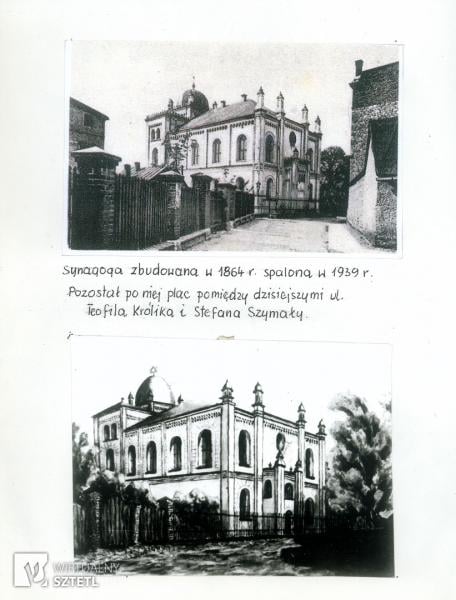
At that time the Cohn family were involved in the development of the local mining. Samuel Cohn opened the iron ore mines in Nakło (1842), Piekary Rudne, Radzionków and in Tarnowskie Góry (1856). In 1861 the town was inhabited by 415 Jews who constituted 7.5% of the whole town population. In 1862 Hews Schlesinger and Popelhauer opened an iron ore mine in Nakło. In 1864 a new synagogue was built in the place of the former prayer house. In 1868 Chewra Kadischa was founded (the Society for the Care of the sick and the burial service).
In 1872, the Oberschleische Synagogen- Gemainden (Association fo the Upper Silesian Synagogue Districts) was created. The kehila of Tarnów was a part of that association.
In 1872 Tarnowskie Góry was inhabited by 589 Jews and in 1885 the number reached its maximum of 627 Jews. In 1899 the ritual bath (mikveh) was built. The turn of the 19th and 20th century was characterized by the rise of Jewish immigration to the west. Due to this reason in 1900 the town was inhabited by 418 Jews and in 1910 there were 329 Jews[1.16].
After the incorporation of Tarnowskie Góry to Poland in 1922 the majority of local Jews emmigrated to Germany. At that time many German Jews identified themselves with Germans and did not approve of the nationality change. In 1925 there were 193 Jews in Tarnowskie Góry who constituted 0.5% of the entire town population. In 1931 in the whole County of Tarnowskie Góry there were 360 Jews who constituted 0.6% of the entire town population[1.17]. However, when in 1933 the Nazis came to power in Germany a number of the emigrants returned to Tarnowskie Góry. Thus, the number of Jews in the town grew to about 300 persons again. In 1934 a Zionist camp “Gemilus Chaudim” was set up near Tarnowskie Góry in which pioneers were to be prepared for settlement in Palestine. In the same year the Jewish Gymnastic-Sport Society “Makabi” was founded[1.18]. The census conducted in 1936 showed that there were 360 Jews in Tarnowskie Góry, 183 of which spoke Polish, 109 – German, 66 spoke Yiddish and only one spoke Hebrew. In 1939 there were still 113 Jews left[1.19].
During World War II in September 1939 Germans burnt down the synagogue, the ruins of which were dismantled in 1943. In the winter of 1940 the Nazis deported all the Jews from Tarnowskie Góry to ghettos in the General-Government.
Bibliography
- Górny M., Stan i struktura ludności Tarnowskich Gór w latach 1801–1872, „Studia i Materiały z Dziejów Śląska” 1986, nr 15.
- Gwóźdź K., Żydzi w okresie Habsburgów, [w:] Historia Tarnowskich Gór, red. J. Drabina, Tarnowskie Góry 2000.
- Gwóźdź K., Żydzi w okresie międzywojennym, [w:] Historia Tarnowskich Gór, red. J. Drabina, Tarnowskie Góry 2000.
- Gwóźdź K., Żydzi w okresie pruskim, [w:] Historia Tarnowskich Gór, red. J. Drabina, Tarnowskie Góry 2000.
- Immerwahr W., Juden in Oberschlesien, maszynopis z 1932 r.
- Heitmann M., Lordick H., Przyczynek do historii Żydów na Śląsku, [w:] Przebudź się serce moje i pomyśl, Berlin – Opole 1995.
- Jaworski W., Ludność żydowska w województwie śląskim w latach 1922–1939, Katowice 1997.
- Klose P., Stadtchronik der freien Bergstadt Tarnowitz in deutscher Sprache. Die Juden in Tarnowitz. Maszynopis w Archiwum Stowarzyszenia Miłośników Ziemi Tarnogórskiej.
- Maser P., Weiser A., Juden in Oberschlesien, t. I, Berlin 1992.
- Nowak J., Kronika miasta i powiatu Tarnowskie Góry, Tarnowskie Góry 1927.
- Piekarniczyk A. i Ł., Społeczność żydowska, Tarnowskie Góry i okolice [online] 13.04.2005, http://www.tarnowskiegory.one.pl/historia/spolecznosc-zydowska.html [dostęp: 04.11.2014].
- Piernikarczyk J., Historja miasta Tarnowskich Gór 1526–1926, Tarnowskie Góry 1926.
- Rabin I., Vom Rechtskampf der Juden in Schlesien (1582–1713), [w:] Jahresbericht der judisch-teologischen seminars fur das Jahr 1926, Breslau 1927.
- Walerjański D., Dzieje Żydów w Wolnym Mieście Górniczym Tarnowskie Góry, „Rocznik Muzeum w Tarnowskich Górach” 2008, t. II.
- Walerjański D., Z dziejów Żydów na Górnym Śląsku do 1812 roku, „Pismo Muzealno-Humanistyczne Orbis” 2005, t. V.
- Walerjański D., Zatarty czas – Żydzi w Tarnowskich Górach, „Montes Tarnovicensis” 2006, nr 23 [online:] http://www.montes.pl/montes23/montes_18.htm [dostęp: 04.11.2014; niedostępne 20.03.2023].
- Winkler C., Historische Nachrichten über die Stadt Tarnowitz, „Myslowitzer Stadtblatt” 1863, nr 25.
- Zivier E., Die Entwicklung der jüdischen Bevölkerung in Oberschlesien, [w:] Jubiläumsbericht anlässlich des Synagogen-Gemeinden-Verbandes des Regierungsbezirks Oppeln 1888 bis 1913, Königshütte 1913.
- [1.1] National Archive in Katowice, The acts of the Town of Tarnowskie Góry, catalogue number 2027. page 44.
- [1.2] National Archive in Katowice, The acts of The town of Bytom, catalogue number 866. page 5.
- [1.3] A.Steinert, Geschichte der Juden in Oppeln, Opeln 1922, s. 23 [w:] D.Walerjański, Z dziejów Żydów na Górnym Śląsku do 1812 roku [w:] Pismo Muzealno-Humanistyczne Orbis, Muzeum Miejskie w Zabrzu, Katowice 2005, t. V, s. 33
- [1.4] P.Maser, A.Weiser, Juden in Oberschlesien Teil 1, Berlin 1992, s. 26 [w:] D.Walerjański, Z dziejów Żydów na Górnym Śląsku do 1812 roku [w:] Pismo Muzealno-Humanistyczne Orbis, Muzeum Miejskie w Zabrzu, Katowice 2005, t. V, s. 34
- [1.5] I.Rabin, vom Rechtskampf der Juden in Schlesien (1582-1713) [w:] Jahresbericht der judisch-teologischen seminars fur das Jahr 1926, Breslau 1927, s. 50-51 [w:] D.Walerjański, Z dziejów Żydów na Górnym Śląsku do 1812 roku [w:] Pismo Muzealno-Humanistyczne Orbis, Muzeum Miejskie w Zabrzu, Katowice 2005, t. V, s. 34
- [1.6] W.Jaworski, Z dziejów Żydów bieruńskich, Bieruń Stary 1989, s. 4 [w:] D.Walerjański, Z dziejów Żydów na Górnym Śląsku do 1812 roku [w:] Pismo Muzealno-Humanistyczne Orbis, Muzeum Miejskie w Zabrzu, Katowice 2005, t. V, s. 35
- [1.7] M.Heitmann, H.Lordick, Przyczynek do historii Żydów na Śląsku [w:] Przebudź się serce moje i pomyśl, Berlin, Opole 1995, s. 52 [w:] D.Walerjański, Z dziejów Żydów na Górnym Śląsku do 1812 roku [w:] Pismo Muzealno-Humanistyczne Orbis, Muzeum Miejskie w Zabrzu, Katowice 2005, t. V, s. 35
- [1.8] J.Jacobson, Die Judenburger-Bucher der Stadt Berlin, Berlin 1962 [w:] D.Walerjański, Z dziejów Żydów na Górnym Śląsku do 1812 roku [w:] Pismo Muzealno-Humanistyczne Orbis, Muzeum Miejskie w Zabrzu, Katowice 2005, t. V, s. 36.
- [1.9] P. Nadolski, Historia osadnictwa Żydów w Gliwicach - sytuacja prawna Żydów na Śląsku do I wojny światowej [w:] Żydzi Gliwiccy, red. B. Kubita, Muzeum w Gliwicach, Gliwice 2006, s. 51
- [1.10] W.Jaworski, Z dziejów Żydów bieruńskich, Bieruń Stary 1989, s. 5 [w:] D.Walerjański, Z dziejów Żydów na Górnym Śląsku do 1812 roku [w:] Pismo Muzealno-Humanistyczne Orbis, Muzeum Miejskie w Zabrzu, Katowice 2005, t. V, s. 36
- [1.11] Dariusz Walerjański, Żydzi Tarnowskich Gór; http://www.montes.pl/montes23/montes_18.htm [stan na 15.08.2009, link inactive].
- [1.12] A.Eisenbach, Emancypacja Żydów na ziemiach polskich 1785-1870, Warszawa 1988, s. 128-129 [w:] D.Walerjański, Z dziejów Żydów na Górnym Śląsku do 1812 roku [w:] Pismo Muzealno-Humanistyczne Orbis, Muzeum Miejskie w Zabrzu, Katowice 2005, t. V, s. 37
- [1.13] M. Górny ”Stan i struktura ludności Tarnowskich Gór w latach 1801-1872” [w] ”Studia i Materiały z Dziejów Śląska” No 15. 1986 r. page 299.
- [1.14] S.Stern, Der preusische und die Juden, Erste Abteilung Darstellung, Tubingen 1971 [w:] D.Walerjański, Z dziejów Żydów na Górnym Śląsku do 1812 roku [w:] Pismo Muzealno-Humanistyczne Orbis, Muzeum Miejskie w Zabrzu, Katowice 2005, t. V, s. 39
- [1.1.13] [a] [b] M. Górny ”Stan i struktura ludności Tarnowskich Gór w latach 1801-1872” [w] ”Studia i Materiały z Dziejów Śląska” No 15. 1986 r. page 299.
- [1.15] Urzędowa gazeta „Neustädter Kreisblatt” z 30.06.1851.
- [1.16] http://www.tarnowskiegory.one.pl/historia/spolecznosc-zydowska.html
- [1.17] J. Prażmowski ”Szkolnictwo w województwie śląskim” Katowice 1936, p. 11. „Śląskie Wiadomości Statystyczne” 1936 r
- [1.18] Dariusz Walerjański ”Żydzi Tarnowskich Gór” http://www.montes.pl/montes24/montes_17.htm
- [1.19] W. Jaworski ”Ludność żydowska w województwie śląskim w latach 1922-1939” Katowice 1997. p. 34,38.