
The first Jews settled in Żyrardów in 1840, but their greatest influx came in the 1870s. The newcomers stemmed mostly from nearby towns, Mszczonów, Wiskitki and Grodzisk.
The increase in settlement was closely connected to the industrialization and urbanization of Żyrardów. A Jewish section arose gradually in the Ruda area neighboring Żyrardów. It was made up of about 200 houses at Fabryczna, Bagno, Kolejowa and Przejazd Streets, at the intersections of Wąska, Targowa and Szeroka Streets and Dittricha and Hiellego Avenues. Beginning in the middle of the 19th century, a Jewish community infrastructure began.
A Jewish cemetery was founded in 1850. A small rented house served as the house of prayer. In the 1870s it was in a state of ruin. In 1874 Count Sobański donated a plot of land worth about 1,100 rubles at Szulmana Street to the local Jews to allow them to build a synagogue. Construction started shortly on a sizeable brick building. Hielle and Dittrich, owners of the Żyrardów factory also contributed 500 rubles to its construction, as well as 10 rubles for the repair and renovation of the old house of prayer.
The social-occupational structure was typical of a small-town Jewish community. Merchants and artisans, who fulfilled the needs of the workers’ community, dominated. Relatively few Jews had other occupations. Standing out among the latter were the industrialists Dawid and Mejer Pines and Hersz Wein, who owned a distillery. They later sold it to Dauman. This factory continues to exist as a part of the Polmos concern. The brothers Jan, Ludwik and Wilhelm Schmidt founded three tanneries in the village of Teklinów near Żyrardów. The brothers Max and Herman Oxner were the proprietors of a weaving mill and a large bookshop in Żyrardów. The Zyskind family owned extensive forests near the settlement and several lumber mills and carpentry workshops. World War II put an end to the existence of the Jewish settlement in Żyrardów.
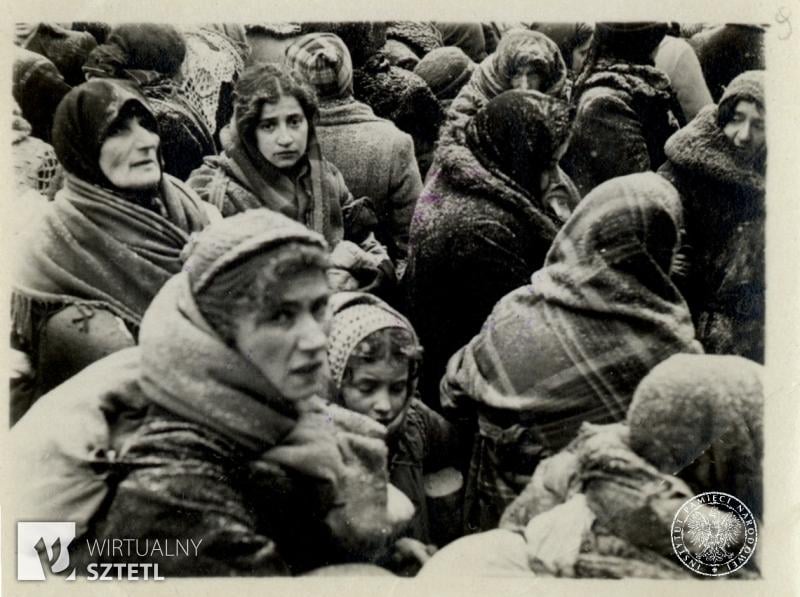
On October 1, 1940, a ghetto was created between Fabryczna (today Okrzei), Familijna (today Mireckiego) and 1 Maja Streets. About 1,000 people from neighboring towns, mostly Sochaczew (ca. 900), Aleksandrów Łódzki and Mszczonów were forced to settle in the ghetto alongside the Żyrardów Jews. At the beginning of 1941, about 5,000 people were living in it. All were resettled to the Warsaw Ghetto on February 1-9, 1941[1.1].
- [1.1] For more information, see Elżbieta Hulka-Laskowska, Żyrardowscy Żydzi w mojej pamięci (Żyrardów: Mazowiecki Ośrodek Badań Naukowych MTK im. Stanisława Herbsta Stacja Naukowa w Żyrardowie, Towarzystwo Przyjaciół Żyrardowa, 1985); and http://www.muzeumzyrardow.pl/old/index_0800.php?id=ciekawostki_zyrardowscy_zydzi.