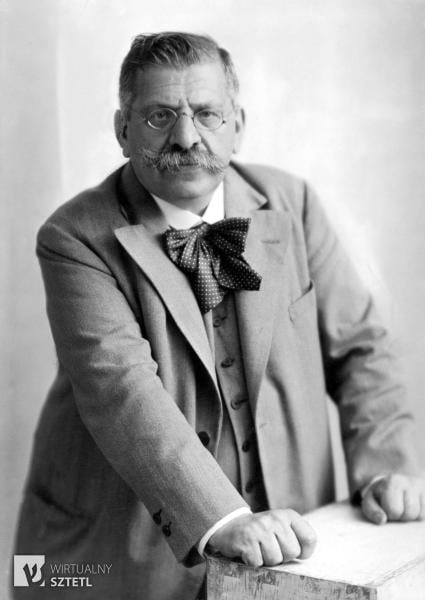
Hirschfeld Magnus (14/05/1868, Kolberg/Kołobrzeg – 14/05/1935, Nice) - doctor, sexologist, founder of the Institute of Sexology in Berlin.
Magnus Hirschfeld was born in Kołobrzeg (German: Kolberg) on 14th May 1868 into an assimilated family of German Jews. He was the seventh child of doctor Hermann Hirschfeld (1825 - 1885) and Fryderyka nee Mann (1836–1904). His father came from Neustettin (Pol. Szczecinek) and his mother from Bernstein (Pol. Pełczyce). The Hirschfeld couple had eleven children, seven of whom reached adulthood – Magnus, Recha, Franziska (a writer), Immanuel, Eduard, Agnes and Jenny.
Years later, in his memoirs, Hirschfeld wrote that his father considered himself a “German citizen of the Jewish faith or, better yet, of the Jewish tradition” and he was one of those who “although they more or less adhere to the old traditions and customs, also consider themselves Jews but, at the same time, they become deeply rooted in the country of their birth, their true homeland”
Hermann Hirschfeld was involved in the life of his local community, not only as a doctor at the Jewish Spa Hospital (German: Jüdisches Kurhospital im See-, Sool- und Moorbade Colberg), but also as a member of the Committee Supporting Poor Jewish Spa Clients (German: Komitee zur Unterstützung Armer Jüdischer Badegäste), as well as being a contributor of the “Kołobrzeg Pomorskie Newspaper” (German: Kolberger Zeitung für Pommern). Unfortunately, Magnus’ father died unexpectedly on 19th June 188. A year later, the residents of Kolberg (Polish: Kołobrzeg) honoured his memory with a black marble obelisk which was placed on the spa promenade.
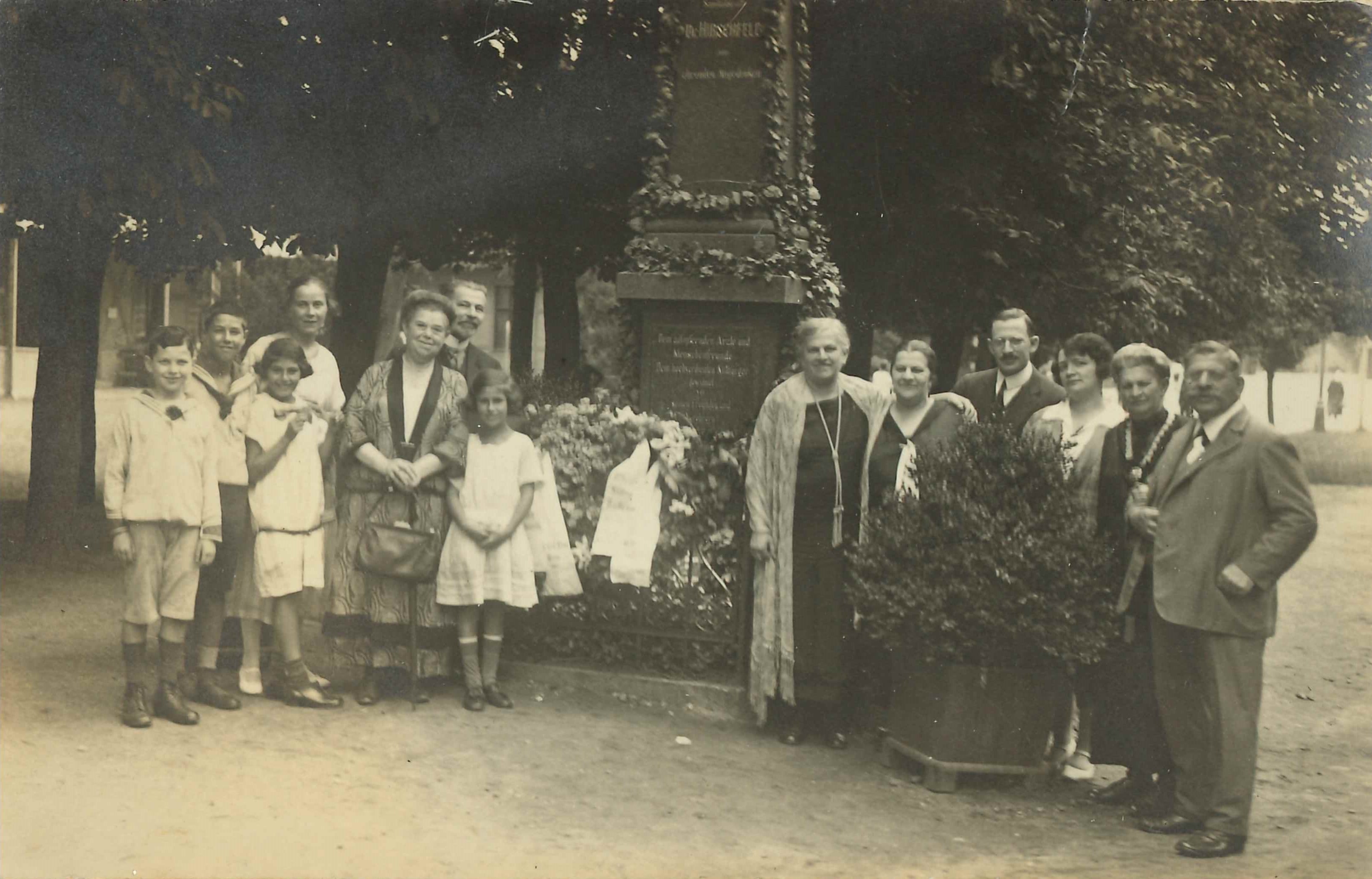
The Hirschfeld and Mann families in front of the monument commemorating Hermann Hirschfeld. On the right side of the monument: Magnus Hirschfeld, Magnus sisters: Recha Tobias, Jenny Hauck and Franziska Mann. On the left side of the monument: Julius and Martha Mann, Erst Maass - stands first from the left. Photo courtesy of Magnus-Hirschfeld-Gesellschaft e.V. All rights reserved to MHG e.V.
In 1887, Magnus Hirschfeld gained his matriculation certificate from the Cathedral Gimnazjum in Kołobrzeg, after which he studied linguistics at the University of Wrocław [German: Breslau]. In his documents, he stated that he was of the Jewish faith. After the first semester, he changed his course of study, choosing medicine, which he then studied at the universities of Strasbourg (two semesters), Munich (two semesters), Heidelberg (three semesters interrupted by military service and Berlin where, in 1892, he received his doctorate of thesis entitled On Nervous System Diseases as a Result of Influenza (German: Über Erkrankungen des Nervensystems im Gefolge der Influenza). After passing the state medical examination in 1893, he went on a year-long trip to the United States and the Middle East.
Upon returning, he opened a medical practice in Magdeburg-Neustadt, where he mainly dealt with natural methods of treatment. He was a member of the management of the local sanitorium. At that time, the famous case of Oscar Wilde was pending. Before a London court, he had been accused of having homosexual relations. The reverberations of that trial and the fact that one of Hirschfeld’s homosexual patients had committed suicide, prompted the doctor to deal with the issue of human sexuality.
In August 1896, soon after moving to Charlottenburg near Berlin, he published a pamphlet entitled Sappho and Socrates – or How the Love of Men and Women for Persons of their Own Gender is Explained (German: Sappho und Sokrates oder wie erklärt sich die Liebe der Männer und Frauen zu Personen des eigenen Geschlechts). This connection of an attempt to scientically describe the phenomenon of homosexuality with a specific gay manifesto met with great interest and aroused much social discussion.
Shortly afterwards, in May 1897, together with publisher Max Spohr, lawyer Eduard Oberg and writer Franz Joseph von Bülow, Hirschfeld established the Scientific-Humanitarian Committee (German: Wissenschaftlich-Humanitäre Komitee, WhK), the purpose of which was to fight the criminalisation of homosexual relationships. Hirschfeld’s deputy at WhK, from 1905 to 1914, was medical doctor Georg Merzbach.
The Committee created a petition aimed at abolishing the criminalisation of homosexual intercourse (German: Die Petition gegen § 175 RStGB - paragraph 175 was a provision of the German Penal Code from 1871, which defined homosexuality as fornication contrary to nature). It was signed by around 200 publicly-known people. Unfortunately, despite the support of some Social Democrats (Hirschfeld was a long-time member of the SPD), the petition was rejected by the parliament. Attempts, by the Committee, to introduce changes in the law (in 1898 and 1907) also failed.
In 1899, at the same time as the Committee’s activities, Hirschfeld began publishing a periodical entitles “A Yearbook Devoted to Intermediate Sexual Degrees, with Particular Reference to Homosexuality” (German: “Jahrbuch für sexuelle Zwischenstufen unter besonderen Berücksichtigung der Homosexualität”), in which he and his colleagues published the results of research into homosexuality.
The view, that sexual orientation, like gender characteristics, is an innate feature was introduced into scientific discussion, as early as in 1849, by the French physician Claude-François Michéa. Hirschfeld, however, assumed that these “intermediate steps” were the result of activity of hormones which he called andrin and gynecin. The term “intermediate degrees” (German: Zwischenstufen) itself Hirschfeld invented based on the earlier ideas of "Urning" (for males) and "Urninde" (for femals) used by history’s first gay activist, German lawyer Karl Heinrich Ulrichs in the 1870s.
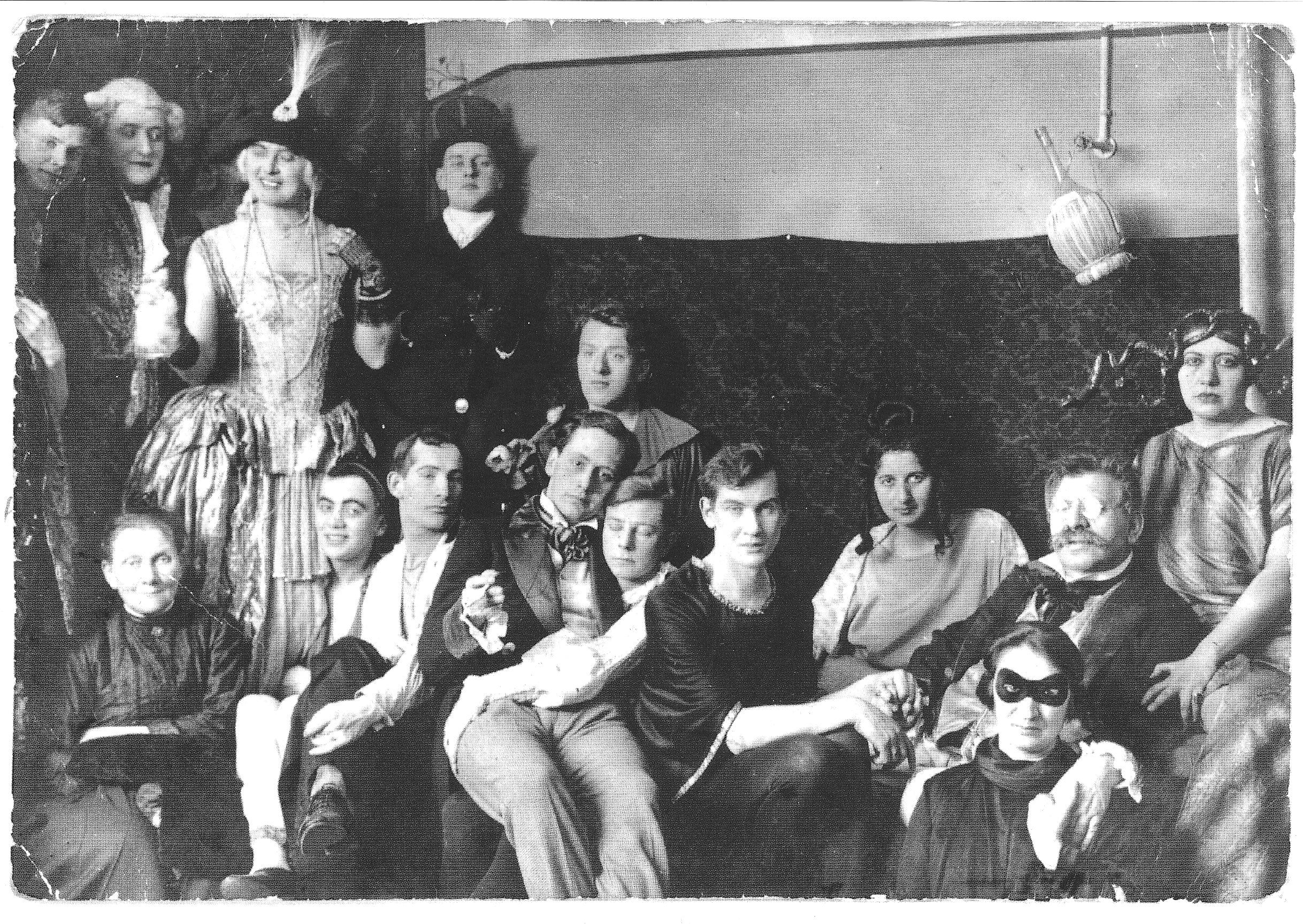
Magnus Hirschfeld (seated on the right, wearing glasses) holds the hand of his partner Karl Giese at a costume ball at the Institute of Sexual Sciences. Photo courtesy of Magnus-Hirschfeld-Gesellschaft e.V., Berlin. All rights reserved to MHG e.V.
In his research, Hirschfeld methodically described the entire spectrum between “a man without any feminine qualities” and “a woman without any masculine qualities”. His theory was later criticised as it did not explain the phenomenon of homosexuality. Hirschfeld, himself, admitted that the observation which he conducted were only intended to scientifically organise the phenomena being studied.
Questionnaire research on sexual orientation, conducted by Hirschfeld in 1903-1904, was collected from among 3,000 technical school students in Charlottenburg and from almost 6,000 metal industry workers. It showed that approximately 1.5% of them could be described as homosexual and approximately 3.9% as bisexual. After some of the students interviewed felt offended by the survey, the doctor was fined 200 marks or 20 days in prison.
Even though in Hirschfeld’s opinion, from a medical viewpoint, homosexuality was not a disease and did not require treatment, he believed that people suffering from it should be offered therapeutic methods. In the periodical, which he edited, he informed readers of new methods of treatment and directed those interested to doctors who dealt with them – including those who performed castrations on patients and even implanted the testicles of heterosexual men.
During World War I, Hirschfeld worked for the Red Cross, including as a doctor for prisoners-of-war. At this time, he wrote a three-volume work entitled Sexual Pathology – a Textbook for Doctors and Students (German: Sexualpathologie. Ein Lehrbuch für Ärzte und Studierende). Subsequent volumes were published in 1917-1920. It was in this work that Hirschfeld conceded that there was no effective method to change a homosexual into a heterosexual.
In 1918, he established the foundation "Dr. Magnus-Hirschfeld-Stiftung". A year later, Richard Oswald created the first gay film in history entitled “Different from the Rest” (German: Anders als die Andern). Magnus Hirschfeld not only wrote the film’s script, but also starred in it, alongside Conrad Veidt, Reinhold Schüntzel and Anita Berber. He played the role of a doctor who, in a fiery speech before a court, convinced the court that homosexuality was not a disease and called for the acceptance of homosexual people.
In 1919, in Berlin, together with dermatologist Friedrich Wertheim and neurologist and psychotherapist Arthur Kronfeld, Hirschfeld opened The Institute of Sexual Sciences (German: Institut für Sexualwissenschaft). The aim of the Institute’s activities was to help people with sexual problems, prepare procedural decisions, conduct research and training and to accumulate archival documentation. Its library offered the latest scientific publications. The institute attracted many famous activists. In 1921, it organised the 1st International Conference for Sexual Reform.
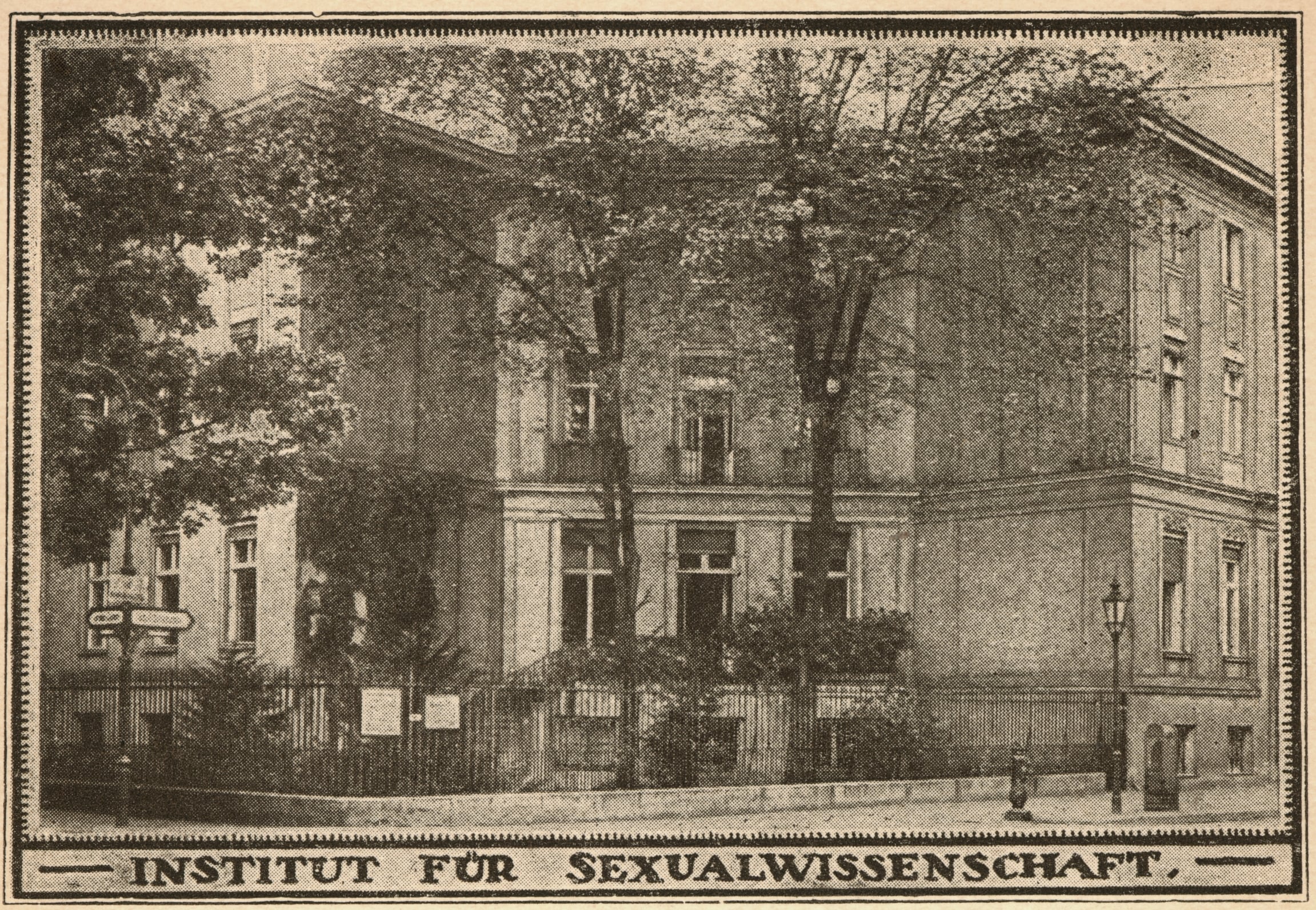
Institute of Sexual Sciences (Institut für Sexualwissenschaft) founded by Magnus Hirschfeld in 1919 in Berlin. Photo courtesy of Magnus-Hirschfeld-Gesellschaft e.V. All rights reserved to MHG e.V.
Despite reluctance within conservative circles, the Scientific and Humanitarian Committee, closely linked with the Berlin Institute, made further attempts to abolish Paragraph No. 175. To this end, 6,000 signatures were collected from representatives of the worlds of politics, medicine, art and science. Thousands of letters were sent to the Catholic clergy, to legislators, journalists and mayors. Although numerous press articles, scientific papers and lectures spread knowledge about homosexuality, the petition was again rejected both in 1922 and 1925. Success came only in 1929. However, the Reichstag did not have enough time to implement the change – and soon the Nazis would come to power.
Hirschfeld’s involvement in the fight for equal rights for homosexuals, both in Germany and around the world, caused him to be disliked by right-wing and antisemitic circles. In October 1920, he became the target of an attack and assassination attempt. Following a lecture in Munich, he was badly beaten. Neither Hirschfeld nor any of his Committee members ever publicly admitted to being homosexual. Doctors would have probably been banned from practising their profession. Each stressed that they began their activities for scientific and humanitarian reasons.
In November 1930, Hirschfeld accepted an invitation to lecture in the United States, after which he continued his travels. He visited Honolulu, Japan, China, Indonesia, India and the Middle East. He described his observation in his book The World Journey of a Sexual Researcher (German: Die Weltreise eines Sexualforschers, 1933). During his activities, he abandoned his Jewish faith, firstly describing himself as non-denominational and, later, as a monist.
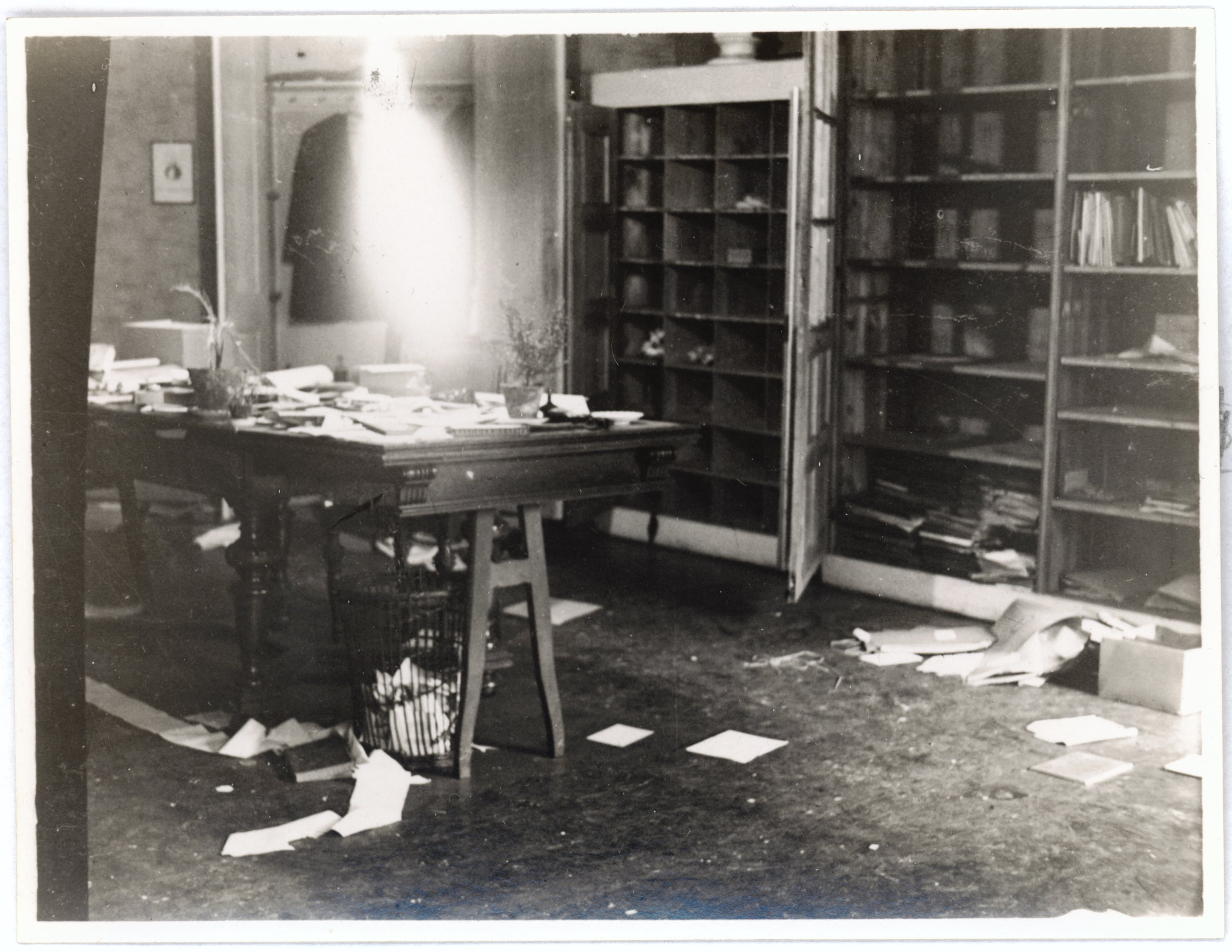
The library at the Magnus Hirschfeld Institute of Sexual Sciences was ransacked and destroyed by the Kripo and the SS in 1933.
Photo courtesy of Magnus-Hirschfeld-Gesellschaft e.V., Berlin. All rights reserved to MHG e.V.
On 6th May 1933, the Institute of Sexual Research was ransacked by the Kriminalpolizei and divisions of the SA stormtroopers. The archives, located there, were burned. Hirschfeld never returned to Germany. Initially, he lived in Zurich and Ascona, then in Paris and Nice. After the Nazis came to power, his publications were deemed as “damaging to the people and the race”. They were removed from libraries and were destroyed.
In January 1935, Hirschfeld wrote his will. He named his partners, Karol Giese and Li Shiu Tong, as his heirs, specifying that they were to allocate their inheritance to continue his work. He hoped that they would use the materials, saved from Berlin, to establish a new facility. However, the attempt to recreate the Institute in Paris failed.
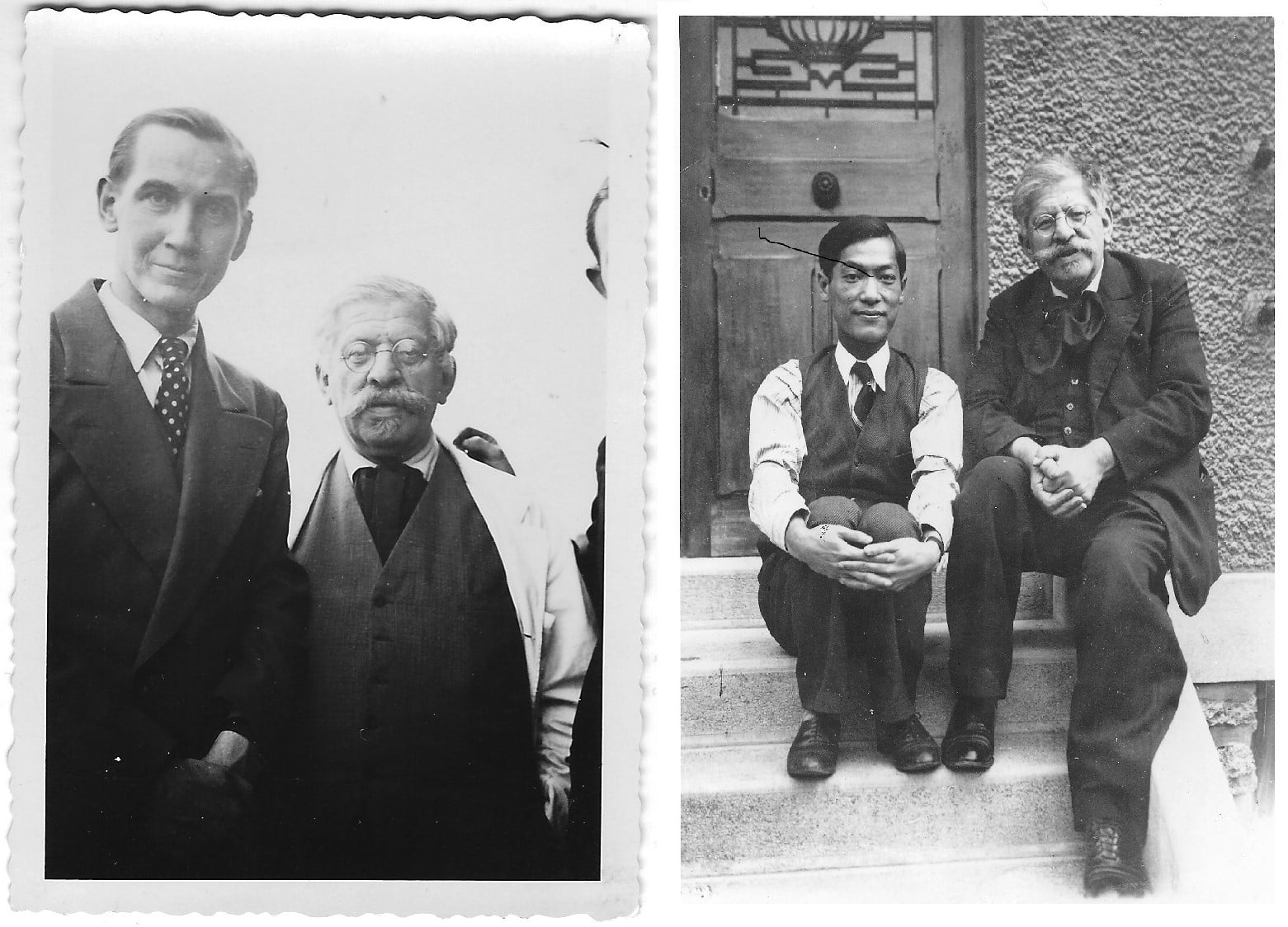
Magnus Hirschfeld with his work and life partners Karl Giese (pic left) and Li Shiu Tong (pic right). Photographs taken around 1933-1934. Courtesy of Magnus-Hirschfeld-Gesellschaft e.V. All rights reserved to MHG e.V.
Magnus Hirschfeld died in Nice on 14th May 1935, on his 67th birthday. Karl Giese outlived him by three years. In March 1938, he committed suicide in Brno, gassing himself in his apartment. Li Shiu Tong spent World War II in Switzerland, where he continued his medical studies after which he returned to Hong Kong; then relocated from Hong Kong to Vancouver in Canada, where he died in 1993.
Hirschfeld’s headstone bears the life mottos “per scientiam ad iustitiam” (though science to justice).
dr hab. n. hum. dr n. med Maria Ciesielska
The Works of Magnus Hirschfeld:
- Sappho und Sokrates, Lipsk 1896 (under the pseudonym “Th. Ramien”).
- Hirschfeld M., § 175 des Reichsstrafgesetzbuches: die homosexuelle Frage im Urteile der Zeitgenossen, Lipsk 1898, [online] https://digital.ub.uni-duesseldorf.de/ihd/content/titleinfo/3447084 [accessed: 20/03/2024]
- Hirschfeld M., Was muss das Volk vom Dritten Geschlecht wissen!, Lipsk 1901.
- Hirschfeld M., Der urnische Mensch, Lipsk 1903.
- Hirschfeld M., Berlins Drittes Geschlecht, Berlin u. Lipsk 1904, (online).
- Hirschfeld M., Vom Wesen der Liebe. Zugleich ein Beitrag zur Lösung der Frage der Bisexualität, Lipsk 1906.
- Hirschfeld M., Die Transvestiten: Eine Untersuchung über den erotischen Verkleidungstrieb, mit umfangreichem kasuistischem und historischem Material, Berlin 1910.
- Hirschfeld M., Naturgesetze der Liebe: Eine gemeinverständliche Untersuchung über den Liebeseindruck, Liebesdrang und Liebesausdruck, Lipsk, 1914.
- Hirschfeld M., Die Homosexualität des Mannes und des Weibes, Berlin 1914, [online] https://wellcomecollection.org/works/qvh5uene/items?canvas=3, [accessed: 20/03/2024]
- Hirschfeld M., Warum hassen uns die Völker? Bonn 1915.
- Hirschfeld M., Kriegspsychologisches, Bonn 1916.
- Hirschfeld M., Sexualpathologie. Ein Lehrbuch für Ärzte und Studierende, Bonn, 1917–1920, 3 volumes.
- Hirschfeld M., Sexualität und Kriminalität. Überblick über Verbrechen geschlechtlichen Ursprungs, Berlin, Lipsk 1924.
- Hirschfeld M., Geschlechtskunde, auf Grund dreissigjähriger Forschung und Erfahrung bearbeitet, 5 volumse, Stuttgart 1926–1930.
- Hirschfeld M., Die Weltreise eines Sexualforschers, Bözberg-Verlag, Brugg 1933.
- Hirschfeld M., Sex in Human Relationships, London 1935.
- Hirschfeld M., Racism Londyn 1938, [online] https://archive.org/details/Magnus-Hirschfeld-Racism/mode/2up [accessed: 20.03.2024]
In Polish
- Hirschfeld M., Seksualizm a kryminalistyka: przestępstwa i choroby na tle płciowem, Warszawa, Kraków, Poznań, Stanisławów 1923.
- Hirschfeld M., Linsert R., Zapobieganie ciąży: środki i metody, Lwów, 1933.
- Hirschfeld M., Psychologja seksualna, Warszawa 1936.
Bibliography:
- Anders als die Andern [online] https://vimeo.com/503754569 [accessed: 14.05.2024]
- Dose R., Magnus Hirschfeld. The origins of the gay liberation movement, New York 2014
- Dziemba R., Magnus Hirschfeld: Żyd, gej, kołobrzeżanin [online] https://miastokolobrzeg.pl/historia/32053-magnus-hirschfeld-zyd-gej-kolobrzezanin.html, [Accessed: 20.03.2024]
- Herzer M., Leben und Werk eines jüdischen, schwulen und sozialistischen Sexologen, [online] http://www.sexarchive.info/BIB/herzer/index.htm, [accessed: 20.03.2024]
- Fijałkowski P., Opowieść o Magnusie Hirschfeldzie [online] https://www.racjonalista.pl/kk.php/s,3222 [accessed: 20.03.2024]
- The Pomeranian Hirschfelds: A Family History, [online] https://magnus-hirschfeld.de/forschungsstelle/projekte/projects/familie-hirschfeld-en/, [accessed: 20.03.2024]
- Helfer Ch., Magnus Hirschfeld, “Neue Deutsche Biographie” 9 (1972), s. 226-227, [online] https://www.deutsche-biographie.de/pnd118815237.html#ndbcontent https://www.deutsche-biographie.de/sfz70159.html#ndbcontent, [accessed: 20.03.2024]
- Magnus-Hirschfeld-Gesellschaft e.V. Forschungsstelle zur Geschichte der Sexualwissenschaft [online:] www.magnus-hirschfeld.de https://magnus-hirschfeld.de/ausstellungen/magnus-hirschfeld-leben-und-werk/ [accessed: 20.03.2024]
- Penkała R., Magnus Hirschfeld, [online] https://www.biografie-niemieckie.pl/magnus-hirschfeld, [accessed: 20.03.2024]